


Buying a car in Switzerland: advantages, sales sites and what to watch out for
Buying a car in Switzerland is especially interesting if you’re looking for a distinctive specification, premium used car, youngtimer or classic car. The range on offer is diverse, and you’ll regularly find versions that are harder to come by in the Netherlands.
But don’t just look at the Swiss selling price. Because Switzerland is not an EU country, importing the car into the Netherlands also involves customs, import VAT, possibly import duties, BPM (Dutch registration tax), transport and registration.
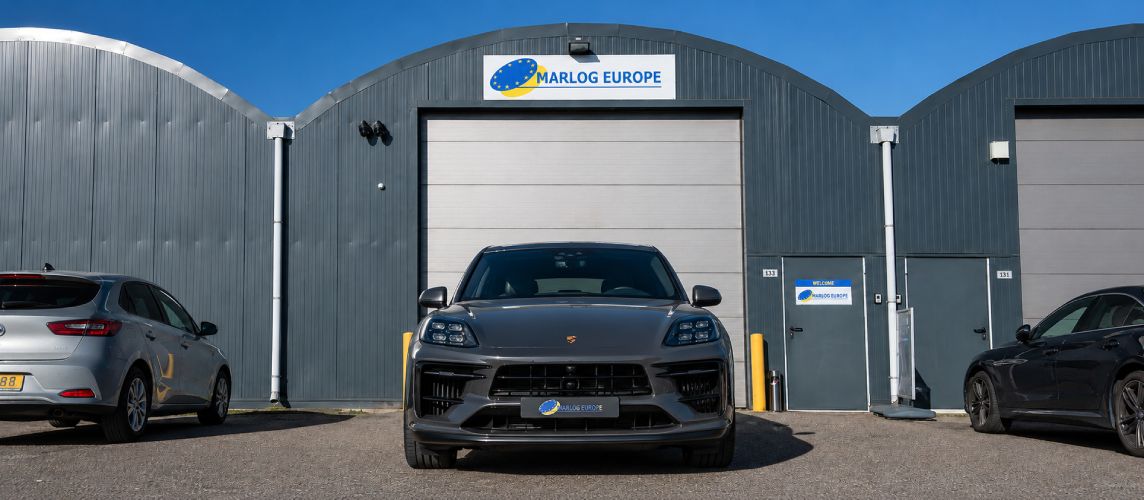
Before you buy, work out what the car will actually cost once fully imported and registered on a Dutch number plate. At the same time, check that all the required documents are available.
That way you avoid finding out afterwards that an appealing Swiss car turned out to be more expensive than expected.
Why buy a car in Switzerland?
Switzerland is particularly interesting because of its wide range of premium cars, distinctive specifications and well-equipped used cars.
Germany and Belgium are familiar markets for Dutch car buyers. Switzerland is considered less often, even though it’s exactly where interesting options can be found.
Plenty of premium cars
Brands such as Porsche, Mercedes-Benz, BMW, Audi and Land Rover are well represented in the Swiss used car market. Four-wheel drive, powerful engine variants and extensive option packages also appear regularly.
That makes Switzerland especially interesting if you’re not just after a particular model, but also have specific preferences for:
- engine;
- colour;
- interior;
- specification;
- options;
- drivetrain.

Interesting for distinctive cars
Enthusiasts of youngtimers, classic cars and exclusive cars can also find interesting cars in Switzerland. With cars like these, mileage isn’t the only thing that matters. Pay particular attention to the maintenance history, originality, work carried out and available documentation.
Want to know more about why the Swiss car market can be interesting? Also read our 7 reasons to import a car from Switzerland.
What are the best car sales sites in Switzerland?
Start your search on AutoScout24, and use Comparis and Autolina as well to compare the wider market.
Using several websites gives you a better picture of both the available range and a car’s market value.

AutoScout24.ch
AutoScout24.ch is one of the leading Swiss websites for used cars. You’ll find both professional dealers and private sellers here. The extensive filters make it easy to search by, for example, specification, year, mileage, engine and options.
Comparis.ch
Comparis.ch is particularly useful for comparing prices and listings. The platform gathers listings from various sources, so you can quickly check how a particular car compares to similar ones.
Autolina.ch
Autolina.ch is also a large, specialised Swiss site with both new and used cars. A good complement to AutoScout24 if you want to see as much of the market as possible.
Anibis.ch and Tutti.ch
General classifieds sites such as Anibis.ch and Tutti.ch list plenty of vehicles as well. You’ll come across relatively more private listings here. There can be interesting cars among them, but check the seller, the vehicle and the documentation extra carefully.
Tip: always search for a specific model across several platforms. That way you’ll find out faster whether a price is genuinely attractive or simply in line with the market.
Which Swiss terms should you know?
A number of terms in Swiss listings tell you something directly about a car’s history or condition. You’ll regularly come across the following terms, especially in German-language listings:
- Occasion – used car
- Fahrzeugausweis – Swiss vehicle registration document
- MFK – Motorfahrzeugkontrolle, the Swiss periodic roadworthiness test
- ab MFK – supplied with a valid/completed MFK
- frisch ab MFK – recently retested
- unfallfrei – according to the seller, accident-free
- servicegepflegt – maintained according to service intervals
- lückenlos servicegepflegt – complete maintenance history
- CH-Fahrzeug – vehicle originally supplied for the Swiss market
It’s worth asking further questions especially about CH-Fahrzeug. Check whether the vehicle was actually originally supplied in Switzerland or was imported from another country at an earlier stage.
What should you watch out for with a car from Switzerland?
Before buying, check three things: the car itself, its history, and the documents you’ll later need for export and import. A low mileage or an attractive listing doesn’t tell the whole story.
Check the chassis number
Before travelling to Switzerland, always ask for the VIN or chassis number. Check that it matches the Fahrzeugausweis and other vehicle documents. With the chassis number, you can sometimes also request additional information from a brand dealer about maintenance, recalls and the original specification.
Ask for the complete maintenance history
Invoices often say more than a stamped service book. So ask for:
- maintenance invoices;
- digital dealer service records;
- replaced parts;
- major repairs;
- previous owners;
- any warranty claims.
Check in particular whether the mileage and maintenance dates line up logically.
Don’t treat a recent MFK as a pre-purchase inspection
A valid MFK is a good sign, but it doesn’t automatically mean the car is technically perfect. The MFK is Switzerland’s periodic technical inspection. A pass means the car met the required technical standards at the time of testing. It doesn’t mean that parts such as tyres, brakes, the clutch, transmission or suspension won’t need attention soon. For an expensive car, an independent pre-purchase inspection therefore remains a sensible step.
Check the chassis and bodywork carefully
Pay extra attention to the chassis, brakes and bodywork of a Swiss car. Winter weather, snow and mountainous roads can put different strain on a car than a comparable Dutch example. So check, among other things:
- underbody;
- brakes;
- suspension;
- tyres;
- wheels;
- bodywork;
- drivetrain.
If possible, also take an extensive test drive.
Ask explicitly about damage
Never simply assume a car is damage-free. Ask the seller explicitly whether the car has had any damage, and preferably record the answer in the purchase agreement. Also look yourself for signs such as:
- colour differences;
- uneven panel gaps;
- overspray;
- inconsistent paint thickness;
- recently replaced body panels.
The term unfallfrei is reassuring to see, but checking for yourself remains wise.
Check for technical modifications
A modification that’s permitted in Switzerland won’t automatically be accepted without issues in the Netherlands. Think of, for example:
- different wheels;
- lowering springs;
- a sports exhaust;
- engine tuning;
- modified lighting.
Ask which parts are not original and which certificates or inspection documents are available for them.
Ask for the CoC
A Certificate of Conformity, if available, can make registration in the Netherlands easier. So ask the seller whether the original CoC is available. For cars with European type approval, this document contains important vehicle data that can come in useful during the registration process.
Buy from a dealer or a private seller?
A dealer usually offers more certainty around documentation and export; buying privately can be more attractive financially.
With a private seller you sometimes get a sharper price and direct information about how the car was used. On the other hand, you’ll need to check and arrange more yourself.
With a professional dealer, it’s often easier to make arrangements around:
- export;
- invoicing;
- VAT;
- vehicle documents;
- warranty;
- proof of origin.
Whichever option you choose, always put the purchase in writing. Include at least:
- chassis number;
- mileage;
- selling price;
- any known damage;
- any known defects;
- documents included;
- agreements made.
Watch out for Swiss VAT
Always ask a dealer for the export price, and don’t automatically assume the listed price is all there is.
In 2026, the standard VAT rate in Switzerland is 8.1%. The tax treatment of a sale can differ upon export, and the exact approach varies by seller. So before buying, ask clearly:
“What is the final selling price once this car is permanently exported to the Netherlands?”
Buying from a private seller? Then there’s normally no separate Swiss VAT that you, as the buyer, can reclaim.
Check before buying whether a EUR.1 is possible
Valid proof of preferential origin can make a big difference to import duties. So check this before finalising the purchase.
Switzerland is not part of the EU. As a result, importing a passenger car can involve import duties. Under certain conditions, however, a preferential import rate may apply if the correct origin of the vehicle can be demonstrated. A EUR.1 certificate can be an important piece of evidence for this.
But be careful: the fact that a car is from a European brand doesn’t automatically mean you won’t owe import duties. The preferential origin has to be demonstrable, and the required documentation has to be drawn up correctly.
So before finalising the purchase, ask whether the seller or exporter can provide the correct proof of origin.
Want to know more about import duties, VAT and BPM? Also check our explanation of BPM, import duties and VAT when importing a car.
What does a car from Switzerland ultimately cost?
Never compare just the Swiss purchase price with a Dutch selling price. Compare the total cost through to Dutch registration.
Say a car costs the equivalent of €30,000, and for this example €1,000 in relevant transport costs is included. Without a valid exemption or preferential proof of origin, the calculation could roughly look like this:
- Purchase + transport
€31,000 - 10% import duties
€3,100 - Basis for import VAT
€34,100 - 21% import VAT
€7,161
In this simplified example, that already adds up to roughly €10,261 in import duties and import VAT. On top of that, you may also need to add:
- BPM;
- transport;
- RDW (Dutch vehicle authority) costs;
- registration;
- any technical modifications;
- other services.
If a valid preferential proof of origin can be used, the difference can be significant. That’s why it’s wise to work out the complete import calculation before buying.
Bought the car? Then the import process begins
Found a suitable car and checked the purchase? Then transport, customs clearance and Dutch registration follow.
Because Switzerland is outside the EU, more steps are involved than when importing a car from, say, Germany or Belgium.
Want to know how this whole process works? In Importing a car from Switzerland in 2026: here’s what you need to know, we explain step by step what to keep in mind after the purchase.
That’s why we deliberately keep the two topics separate: this article helps you find and buy the right car. The import article then helps you bring that car to the Netherlands.
Drive it back yourself or have it transported?
Having the car transported is usually the simplest solution. Driving it back yourself requires more preparation around export plates, insurance and documents.
Want to drive the car to the Netherlands yourself? Then you’ll need to arrange things like temporary export plates and valid insurance.
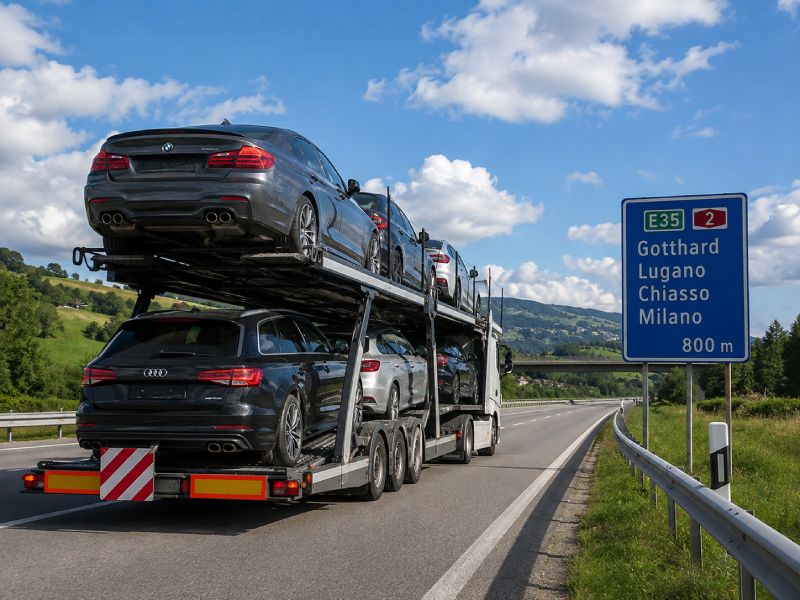
An alternative is to have the car collected in Switzerland and transported to the Netherlands by trailer. Through international road transport, Marlog Europe can collect the vehicle on location and transport it to the Netherlands. For exclusive cars, classics or other valuable vehicles, enclosed transport can also be worthwhile.
Because Switzerland is outside the EU, customs clearance also needs to be arranged correctly.
When is a Swiss car really worthwhile?
Switzerland is particularly worthwhile when the car itself is distinctive enough to justify the extra import steps. Think of:
- a rare specification;
- a distinctive engine;
- a very complete options list;
- an exclusive premium used car;
- an interesting youngtimer;
- a distinctive classic car;
- an exceptionally well-documented example.
Only looking for the cheapest used car? Then Switzerland isn’t automatically the best market. A price difference can quickly disappear because of VAT, import duties, BPM, transport and registration.
The right comparison is therefore:
Not: Swiss selling price versus Dutch selling price.
But: the total price of the Swiss car once registered in the Netherlands versus a comparable Dutch car.
Checklist: check this before buying a car in Switzerland
Found an interesting car? Only buy once you’ve thoroughly checked both the car and the import costs. Go through at least these points:
- ✓
Does the chassis number match the documents? - ✓
Is the maintenance history complete? - ✓
When was the last MFK carried out? - ✓
Is any damage or damage repair known? - ✓
What is the condition of the bodywork and chassis? - ✓
Has the car been technically modified? - ✓
Is the original CoC available? - ✓
What is the final export price? - ✓
Can a valid proof of origin/EUR.1 be provided? - ✓
How will the car be transported to the Netherlands? - ✓
How much import duty and import VAT are owed? - ✓
What BPM is expected? - ✓
What will the car ultimately cost fully registered in the Netherlands?
Can you answer these questions? Then you’re in a real position to judge whether the Swiss car is a good purchase.
Found a car in Switzerland? Check the total import costs first
Found an interesting car on AutoScout24, Comparis, Autolina or another Swiss car sales site?
Preferably have the required documents and the total cost of importing to the Netherlands checked before you finalise the purchase.
Marlog Europe is AEO-certified. Among other things, that means customs processes are handled carefully, administrative processing is well organised, and we work with customs authorities on the basis of recognised expertise in international goods flows.
Marlog Europe can handle the entire process: from transport and customs clearance to BPM, RDW inspection and Dutch registration.
On our page about importing a car from Switzerland, you can read more about how we work and request an indication of the transport costs directly.
Know in advance what your Swiss purchase will really cost
That way you’ll know not only what the car costs in Switzerland, but above all what it will ultimately cost in the Netherlands. Our specialists are happy to think along with you, from the first calculation right through to the complete import.
Prefer to discuss your situation first? Get in touch with an import advisor.